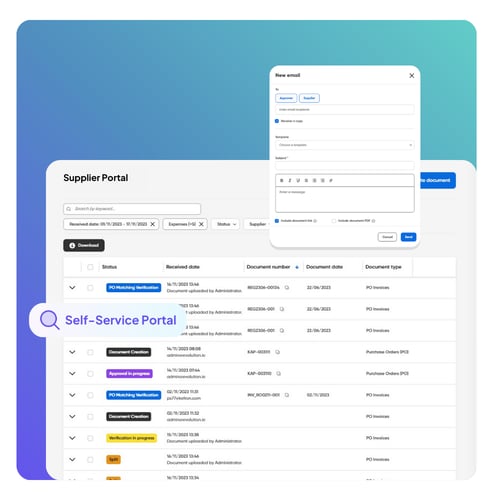
Paperless invoicing is crucial in today’s business environment for improving efficiency and reducing costs. This article explains what paperless invoice processing is, the benefits of going paperless, and how to implement a paperless invoicing system, with a focus on automated solutions like Kefron AP. Enhance your Accounts Payable department by transitioning to electronic invoicing.
In today’s fast-paced business environment, efficiency is more critical than ever. The shift towards paperless invoicing in Accounts Payable departments is a decisive step in this direction. From reducing human error to lowering processing costs, the benefits are numerous. In this guide, we’ll explore what paperless invoice processing is, why you should consider going paperless, and how to successfully implement a paperless invoicing system.
What is Paperless Invoicing?
Paperless invoice processing is an automated approach to managing supplier invoices in a digital format throughout their lifecycle. Instead of handling paper invoices that require manual sorting, data entry, and physical storage, everything is done electronically. This helps in streamlining the approval process, ensuring quicker payments, and simplifying record-keeping. With features like e-signatures, instant verifications, and digital trails for auditing, paperless invoice processing minimises delays and errors, making the whole system more efficient.
Key Steps in Invoice Processing
The efficiency of your paperless invoice processing hinges on a well-structured procedure. Key steps include:
- Invoice Receipt: The first step in efficient invoice processing is the receipt of digital invoices. Your accounting team must review and verify these incoming invoices, ensuring they match the corresponding purchase orders (POs). Invoice automation software can automatically capture invoice data and match it against POs, reducing the need for manual verification and minimising the risk of errors. This automated matching process ensures that only valid invoices are processed, preventing discrepancies and enhancing accuracy.
- Invoice Approval: Once invoices are received and matched with purchase orders, the next step is invoice approval. In a paperless invoicing system, digital invoices are cross-verified for accuracy. Those that match the POs may not require another round of approvals, expediting the process. Paperless invoicing systems can route invoices to the appropriate approvers based on predefined workflows, ensuring that approvals are obtained promptly and efficiently. This not only speeds up the approval process but also maintains a clear audit trail for compliance and record-keeping purposes.
- Invoice Payment: The final step in the invoice processing cycle is payment. Payments are made based on mutually agreed terms, ensuring a seamless process and avoiding late fees. Automated invoicing systems can schedule payments according to the agreed terms, ensuring timely disbursements and optimising cash flow management. By automating payment processing, businesses can reduce the risk of late payments, improve vendor relationships, and take advantage of early payment discounts where available.
Common Pitfalls in Invoice Processing
Errors in paperless invoice processing can wreak havoc. These often stem from:
- Data Entry Errors: Despite the advantages of invoice automation, human errors can still occur during data entry. Even with automated invoicing systems, manual input is sometimes necessary, such as when entering new client information or adjusting invoice details. Mistakes in these entries can lead to incorrect invoicing amounts, delays in payment processing, and a loss of trust with clients. Implementing thorough training and robust validation checks within the paperless invoicing system can help minimise these errors.
- Payment Before Product: One significant pitfall in the invoicing process is making payments before receiving the goods or services. This practice is risky as it can lead to financial losses if the product is not delivered as expected or is of substandard quality. Paperless invoicing systems can mitigate this risk by incorporating checks and balances, such as requiring confirmation of goods receipt before processing payment. This ensures that payments are only made after verifying that the product or service meets the agreed-upon standards.
- Duplicate Payments: Duplicate payments are a common issue that can arise when invoices are not adequately marked as paid or when there is a lack of communication between departments. In a paperless invoicing system, this problem can be exacerbated if the software does not have robust tracking and reconciliation features. paperless invoicing solutions can help prevent duplicate payments by providing real-time updates on invoice statuses, ensuring that once an invoice is paid, it is immediately marked as such in the system. Regular audits and reconciliation processes are also essential to catch any discrepancies early on.
Why the Move to Paperless Invoicing is Crucial
Businesses cannot afford to lag behind competitors, particularly where cost and time efficiencies are concerned. Statistics show that going paperless is not only good for the environment but equally beneficial in practical terms, reducing overheads and human error.
-
Keeping Up with Competitors
In a competitive market, staying ahead means adopting the latest technologies that enhance operational efficiency. Paperless invoicing is one such advancement that is quickly becoming a standard practice among industry leaders. Businesses that fail to transition to electronic invoicing risk falling behind, as they may continue to incur higher costs and longer processing times compared to their peers who have embraced automation.
-
Meeting Customer Expectations
Modern customers expect prompt and professional service, including the timely delivery of invoices. Automated invoicing systems allow businesses to meet these expectations by ensuring invoices are sent out quickly and accurately. This reliability can enhance customer satisfaction and loyalty, giving businesses a competitive edge.
-
Regulatory Compliance
As regulatory landscapes evolve, compliance with financial reporting and data protection standards becomes increasingly critical. Paperless invoicing systems often come equipped with features that ensure compliance with relevant regulations, such as VAT reporting requirements and data protection laws. By adopting these systems, businesses can mitigate the risk of non-compliance penalties and improve their overall governance.
-
Scalability and Growth
Manual invoicing processes can become a bottleneck as a business grows, limiting its ability to scale efficiently. Paperless invoicing systems are designed to handle large volumes of transactions effortlessly, making it easier for businesses to expand without a corresponding increase in administrative workload. This scalability is essential for supporting long-term growth and adapting to market demands.
-
Data Accessibility and Insights
Electronic invoicing provides businesses with immediate access to invoicing data, enabling better financial oversight and decision-making. Advanced analytics and reporting tools can generate insights into cash flow, payment trends, and customer behaviours, helping businesses to make informed strategic decisions. This level of insight is difficult to achieve with paper-based systems.
How to Transition to Paperless Invoicing
Transitioning is not as complicated as it might seem. Here’s how:
- Planning: Effective planning is crucial for a smooth transition to paperless invoicing. Start by consulting with your accounting team to outline your existing workflow and propose improvements. This involves mapping out the current invoicing process, identifying pain points, and determining how invoice automation can address these issues. Engage stakeholders from different departments to gain a comprehensive understanding of the workflow and gather insights into potential improvements. A thorough planning phase ensures that the transition to paperless invoicing is aligned with your business needs and objectives, paving the way for a successful implementation.
- Digitising: Digitising your existing paper documents is a vital step in transitioning to paperless invoicing. Begin by converting all paper invoices, purchase orders, and related documents into digital formats. Use high-quality scanners and AI technology to ensure accurate digitisation. This not only preserves the integrity of your records but also makes them easily searchable and accessible within your automated invoicing system. Properly categorising and indexing these digital documents will facilitate efficient retrieval and processing, streamlining your overall invoicing workflow.
- Automating: Choosing the right software is essential for automating your invoicing process. Select an invoice automation solution that aligns with your specific needs, whether you are a small business or a large enterprise. Look for features such as automated invoice generation, electronic delivery, real-time tracking, and integration capabilities with your existing accounting, CRM, and ERP systems. Ensure the software is user-friendly and offers robust security measures to protect sensitive financial data. Investing in a comprehensive automated invoicing system will significantly enhance efficiency, reduce manual errors, and provide valuable insights into your financial operations.
Implementation of Paperless Invoicing
Choosing the Paperless Invoicing System
Choosing the right electronic invoicing system is crucial for the successful implementation of paperless invoicing. To start, evaluate your business needs. Consider the volume of invoices, integration capabilities with existing systems, and the need for customised invoice templates. An effective system should support invoice automation, reducing manual data entry and errors.
Look for essential features such as automated invoice generation, electronic delivery, real-time tracking, and support for multiple currencies and languages if your business operates internationally. These features enhance efficiency and transparency in your invoicing process. Additionally, ensure the system is user-friendly, with an intuitive interface that your team can quickly learn and use.
Security is a top priority when dealing with financial data. The chosen system should comply with industry standards and regulations, offering robust encryption and secure data storage to protect sensitive information. Finally, consider the cost of the system. Conduct a cost-benefit analysis to ensure the investment is worthwhile, considering long-term savings from reduced paper use and manual labour. Making an informed choice in your electronic invoicing system will set the foundation for a smooth transition to paperless invoicing, improving overall business efficiency.
Training and Integration
Effective training and seamless integration are essential for the successful implementation of paperless invoicing. Begin by clearly communicating the reasons for the transition and the benefits of paperless invoicing to your employees. Transparency helps alleviate resistance and fosters a positive attitude towards the new system.
Develop a structured training programme tailored to different roles within your organisation. Interactive sessions, including hands-on workshops and tutorials, will enhance understanding and retention. Utilise resources provided by the software vendor, such as training materials and support services, to ensure comprehensive guidance.
Integration with existing systems is crucial. Collaborate with your IT department to ensure the new invoicing software integrates smoothly with your current accounting, CRM, and ERP systems, minimising disruption and maintaining data flow. Designate internal champions or super-users who can provide ongoing support and troubleshoot issues as they arise. Regularly gather feedback from employees to identify areas for improvement, ensuring the training programme and integration process meet your organisation’s needs effectively.
Benefits of Paperless Invoicing in Accounts Payable Departments
Here’s a look at the top five advantages of adopting paperless invoicing solutions in your Accounts Payable department:
1. Faster Processing Time
The traditional invoicing method involves multiple paper-handling stages, from collating invoices received via email, post and fax, to entering them into the ERP system. Switching to paperless invoicing solutions allows companies to dramatically speed up this entire process. A study by the Aberdeen Group shows that invoice processing can be cut from an average of 20.8 days to a mere 3.8 days.
2. Less Human Error
In a paper-based Accounts Payable system, you’re vulnerable to human error—misplaced documents, misfiling, and so on. However, paperless invoicing reduced such errors by 37% according to a survey by Sterling Commerce.
3. Lowered Processing Costs
The cost implications of paper-based systems are not to be underestimated. According to Sterling Commerce, traditional paper invoicing can cost between $12 and $30 per invoice, depending on the process adopted. Whereas with paperless invoicing systems, the cost is just $3.50 per invoice.
4. Easier Audit Compliance
Audit time is a stressful period for Accounts Payable departments that still rely on paper documents. Paperless invoicing solutions store all relevant data digitally, making compliance with tax audits more straightforward and reducing the likelihood of fines.
5. End The Paper Mountain
Between collecting, categorizing, copying, processing and storing paper invoices, the paper mountain can become almost K2-esque quite quickly. Research from Kyocera says the average UK office worker uses 45 pages of paper every day. With an estimated 25 million office workers in the country, that makes for a staggeringly high amount of paper use.
By switching to a paperless Accounts Payable process, a business can dramatically reduce paper consumption and with it lower the cost of paper purchasing, support the environment and win the office clutter war.
Kefron AP: Revolutionising Paperless Invoice Processing
In the realm of paperless invoicing, Kefron AP stands out as a comprehensive solution designed to transform traditional invoice processing into a streamlined, automated system. Kefron AP is a leading provider of paperless invoicing solutions, specialising in paperless Accounts Payable processes that enhance efficiency, reduce errors, and lower costs. Here’s an in-depth look at how Kefron AP can revolutionise your invoice management.
Key Features of Kefron AP
- AI-Powered Data Capture: Kefron AP employs advanced artificial intelligence (AI) and optical character recognition (OCR) technology to automatically capture data from invoices. This eliminates the need for manual data entry, significantly reducing the risk of human error. The AI component ensures that all relevant information is accurately extracted and processed, facilitating a smoother and faster workflow.
- Seamless Integration: Kefron AP seamlessly integrates with existing ERP, CRM, and accounting systems. This ensures that all invoice data is synchronised across platforms, maintaining consistency and accuracy. The integration capabilities of Kefron AP allow businesses to continue using their preferred systems while enhancing them with advanced automated invoicing features.
- Real-Time Tracking and Reporting: With Kefron AP, businesses gain access to real-time tracking and comprehensive reporting tools. These features provide visibility into the status of invoices at every stage of the process, from receipt to payment. Real-time insights enable better decision-making and financial oversight, helping businesses manage cash flow more effectively.
- Customisable Workflows: Kefron AP offers customisable workflows that can be tailored to the specific needs of your organisation. Whether you need to route invoices for multiple levels of approval or set up automated reminders for pending payments, Kefron AP provides the flexibility to design workflows that align with your business processes.
- Compliance and Security: Kefron AP ensures compliance with regulatory requirements and industry standards. The system includes robust security measures to protect sensitive financial data, including encryption and secure access controls. By maintaining a secure and compliant invoicing process, businesses can mitigate risks associated with data breaches and regulatory violations.
Transforming Invoice Processing with Kefron AP
The shift to paperless invoicing and automated accounts payable processes can be transformative for many organisations. Here are some testimonials from businesses that have successfully implemented Kefron AP and experienced significant improvements in their operations:
“Prior to the implementation of Kefron AP invoice automation, our accounts payable processes were excessively manual, paper-based, and highly bespoke on a service-by-service basis. Working with Kefron has been a very positive experience. Invoice processing automation has reshaped our accounts payable function for the better and positively influenced the behaviours and practices of hundreds of council employees and thousands of suppliers.”
This testimonial highlights how Kefron AP has streamlined and standardised accounts payable processes, eliminating the inefficiencies associated with manual, paper-based systems. By automating these processes, the organisation was able to enhance operational efficiency and foster better practices among employees and suppliers.
“Shocked by our high paper usage in accounts payable, we saw a pressing need for change. Adopting a paperless accounts payable approach wasn’t just about efficiency; it deeply resonated with our Honesty Project, marking a pivotal shift towards Sustainability in Finance and better invoice management.”
This testimonial underscores the environmental benefits of transitioning to a paperless accounts payable system. By reducing paper usage, the organisation not only improved efficiency but also aligned with their sustainability goals. Kefron AP played a crucial role in this transformation, supporting the organisation’s commitment to sustainability and efficient invoice management.
“The system’s visibility into every invoice’s status has been transformative for our AP team. It’s a significant advantage, providing clarity and efficiency that’s truly fantastic. The feedback is unanimous: we can finally breathe easier, supported by a tool that enhances our workflow in AP automation solution.”
This testimonial reflects the enhanced transparency and efficiency that Kefron AP brings to accounts payable processes. The ability to track the status of every invoice in real-time provides the AP team with the clarity needed to manage their workflow effectively. This improvement not only streamlines operations but also reduces stress, allowing the team to focus on more strategic tasks.
These testimonials illustrate the profound impact that Kefron AP can have on an organisation’s accounts payable processes. By automating invoice processing, reducing paper usage, and providing real-time visibility, Kefron AP helps businesses achieve greater efficiency, accuracy, and sustainability in their financial operations.
Achieving Paperless Invoicing
There’s no doubt that businesses must maximise efficiency and minimise costs, especially in competitive markets. The transition to a paperless invoicing system in Accounts Payable departments is a highly effective way to achieve these goals.
Click here, to find out more about how we can help you make the switch to a paperless Accounts Payable department.