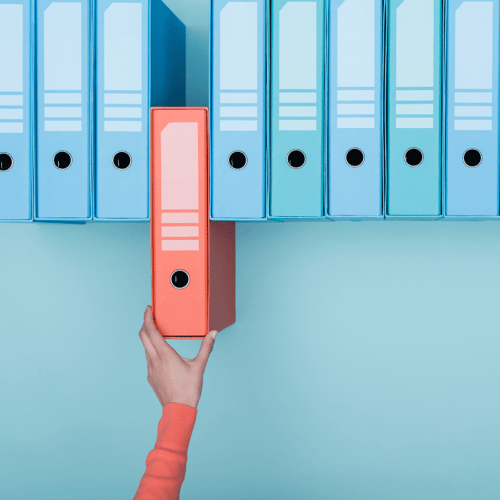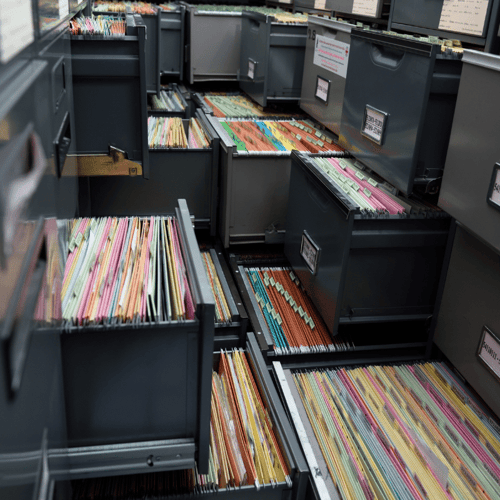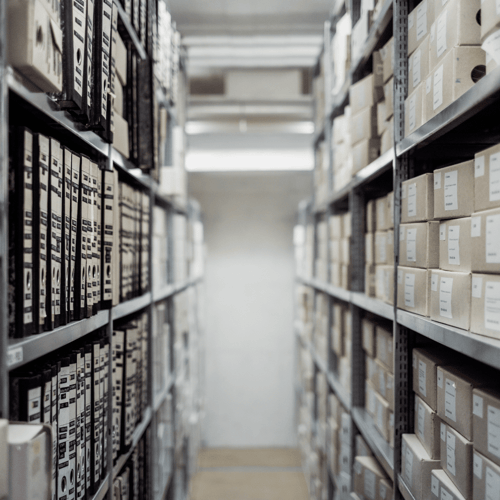
At some point in the evolution of a business, the question of where to store the increasing volume of documents comes up. Whether for business continuity, or minimum legal retention requirements; should you introduce a more sophisticated store and search solution yourself, or pay for a purpose-built facility?
If you are planning to build a business case, here are the top 5 reasons that compel businesses to switch:
1. Disaster Prevention
Keeping documents secure is vital for disaster prevention, sensitive data, and GDPR compliance. It means you can always access your business-critical information. It is easy to misplace a file in an office setting which can lead to a breach of GDPR. Handling hardcopies so the wrong person can’t access sensitive data is difficult. But it doesn’t have to be! Any purpose-built facility will have the highest level of security for your documents. Protecting your documents is priority number one for your document storage provider.
Kefron provide modern security, disaster prevention systems, and access control in line with best practice. Only those pre-authorised by your business will be able to access your information. This can be done on a department-by-department basis. This means only those who should see your business’ information will. The threat of disaster ruining your records is kept to a minimum. This is important because 70% of businesses that lose records due to disaster would fail within 3 weeks. These are regularly reviewed and updated so the highest security standards are kept.
2. Compliance
The added security offered by a purpose-built facility better ensures compliance. All staff in such a facility will have signed confidentiality and non-disclosure agreements. They will also sign any you provide. Once your information enters the care of their staff, it stays there. Being able to assign permissions prevents sensitive information from getting out. This is not the only way offsite storage prevents a GDPR breach. Another significant part of GDPR is following retention periods.
According to GDPR, documents must be stored for a certain period depending on the type. To lose or destroy one is to be non-compliant, which has serious consequences. Not maintaining a file for the appropriate period can violate the second category of obligations under GDPR. This can result in a €20 million fine, or 4% of your business’ worldwide annual turnover, whichever is higher. When storing information with a storage provider, you can set retention dates, and even then, nothing will be moved or destroyed without the proper authorisation. See how Wicklow County Council achieved tighter controls with Kefron.
3. Relocation
Relocating is a difficult process for your team. Maintaining the information kept in business-critical files is vital. Losing physical documents during a big move is easy to do. But replacing the data in them is not. Despite the move, your company must continue business as usual to keep your clients’ trust and business. To do so, you need your organisation’s financial, client, and HR information to hand. files. Having to contact staff and clients to replace this information is an admin heavy task. And one that your team should not have to worry about on top of relocating.
Make the most of the move and transfer your files to a purpose-built facility. Your files will be kept safe and easy to retrieve. With extensive cataloguing and tracking your files won’t be left behind or in the wrong box. Should you need the information, many providers offer same day delivery or scan back. This means that your data is always to hand, so your business can focus on making the most out of the move. See how the Medical Council benefitted from Kefron’s storage and scanning services while relocating.
4. Downsizing
Leasing an office space is costly. With rent across Europe continuing to rise, it’s time to start considering other ways to save. Where moving offices may not be possible for some, downsizing has become more achievable. Hybrid and remote working have led to less and less people coming into the office. This opens opportunities for businesses to downsize to save money and resources.
Many are hesitant to make this change as they need the space to store their documents. However, if you move your files to a document management company you will free up so much space. Plus forcing staff to journey into the workplace just to access a file is a waste of everyone’s time. With a purpose-built facility, files can be sent to wherever you are, whether it be your workplace or home. This saves you and your staff significant space and time, allowing for downsizing.
5. Reduced Overheads
Being able to downsize is hugely beneficial. Storing your documents offsite not only saves money on rent, but in many other ways. As included in a discussed further here, one filing cabinet in a Dublin office costs €1,008 / £900 per year and €2248 / £2,007 in London. It costs approximately €20 to file a single document. Even then, the average employee spends 400 hours per year searching for documents. Filing and misfiling documents costs your business and wastes your teams’ time.
Misfiling, or even losing, files is a frequent problem for companies as 1 out of every 20 files is lost. To find one of these misfiled documents costs €110 and should it remain lost, it takes 25 hours to recreate each lost document. So, let’s say your company creates 100 physical documents a week in your Dublin office:
- It will cost €2,000 worth of labour to file them.
- 5 will be lost and it will cost €550 to recreate them.
- The filing cabinet they are kept in will cost you €20 that week.
Onsite document management will cost your company €2,570 for one week! And that’s without considering the time taken searching for documents. Storing your documents with a purpose-built facility will not cost nearly as much. It also minimises the risk of losing any of your files, saving you further.
With these reasons, it’s hard to see why you wouldn’t build a business case for offsite storage. Though the project may be daunting, the long-term benefits make it more than worth it. To start the move to a purpose-built facility, get more information from Kefron’s experts today.
Authored by Fiona Smart
Fiona is a records management and secure document storage specialist with over 20 years of experience delivering complex information management projects. She shares insights on secure records management, compliance, and document storage best practices across multiple sectors.