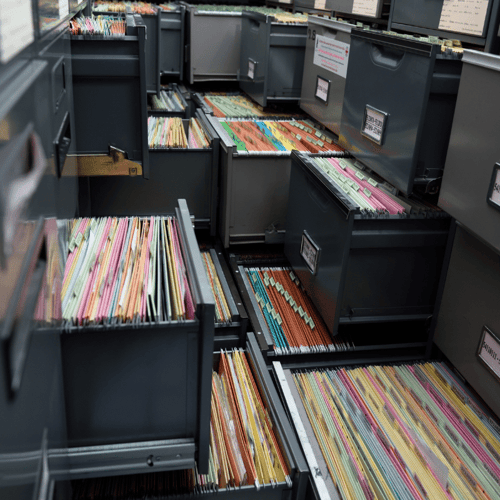
This article explains the essentials of archival storage for physical documents, including best practices, legal compliance, cost factors and secure off-site solutions. It helps organisations manage records effectively and maintain access, security and regulatory readiness.
What Is Archival Storage?
Archival storage is the process of preserving physical documents that are no longer needed for daily use but must be retained for long-term legal, regulatory or historical reasons. These documents may include contracts, personnel files, medical records and financial paperwork.
Rather than storing these documents in office cabinets or basements, archival storage involves relocating them to secure off-site facilities. These specialised facilities are built to protect documents from deterioration, environmental damage and unauthorised access. This ensures that organisations can remain compliant with data retention laws, maintain operational transparency and locate important records when required.
Why Archival Document Storage Is Important
Physical documents are still an essential component of recordkeeping in many sectors. From legal audits to medical history requests, businesses must be capable of retrieving paper records years after they were first created.
Storing paper documents on site consumes valuable space and increases the risk of exposure to fire, water damage or misplacement. Off-site archival storage addresses these challenges by offering climate-controlled conditions, advanced inventory tracking and secure retrieval services. It also enables organisations to reclaim office space and improve information governance.
Understanding Document Storage Methods
Active Filing Compared to Archival Storage
Active filing refers to the short-term storage of documents that are accessed frequently as part of daily operations. These files are often stored in local filing cabinets, desks or shared office file rooms.
Archival storage, on the other hand, is intended for records that are no longer regularly used but must still be preserved. By moving inactive records into archival storage, organisations can free up office space, streamline active file management and reduce the chance of misplacing important documents.
In-House vs Off-Site Archival Storage
Storing archived documents within the office can be inefficient and risky. Internal storage areas typically lack proper environmental controls and may be vulnerable to fire, flooding or unauthorised access.
Off-site archival storage facilities offer several advantages:
- Fire and water resistance
- Controlled temperature and humidity levels
- 24-hour monitored security and restricted access
- Barcode tracking for accurate document retrieval
These features ensure that important records remain protected and accessible when needed, especially during audits, inspections or litigation.
How to Choose the Right Archival Storage Provider
Key Features to Look For
When selecting a professional archival storage provider, consider the following criteria:
- Security: The facility should have alarm systems, CCTV surveillance, locked access zones and identity verification protocols.
- Environmental Protection: Consistent temperature and humidity levels help prevent document fading, mould and paper degradation.
- Retrieval Services: A good provider offers fast document retrieval, often with same-day or next-day delivery.
- Inventory Management: Each box or file should be labelled with a barcode and entered into a searchable system, allowing for efficient tracking and retrieval.
How to Prepare Documents for Archival Storage
Proper preparation ensures that documents remain accessible and intact over time:
- Sort and categorise documents by department or function
- Use acid-free archival boxes to prevent deterioration
- Clearly label each box with a unique identifier
- Create a centralised index or database listing each box’s contents and storage location
This approach simplifies retrieval and supports regulatory compliance.
Best Practices for Managing Long-Term Document Archives
Develop a Document Retention Schedule
A document retention schedule outlines how long each type of record should be stored. These schedules are informed by:
- Legal requirements such as tax or employment regulations
- Industry-specific standards, particularly in healthcare, finance or government
- Internal policies related to operational history or project archiving
Periodic reviews of retention schedules help ensure that outdated records are securely destroyed, lowering storage costs and reducing compliance risks.
Control Access and Monitor Retrieval
Access to archived materials should be restricted based on job roles. To maintain security and accountability:
- Use documented request procedures for file access
- Keep records of who accessed each file and when
- Return files to their original location or box after use
A controlled retrieval process preserves document integrity and supports legal defensibility.
Maintain a Chain of Custody
The chain of custody refers to the documented trail of who has handled or accessed a document. It is particularly important for legal, financial or government archives.
A strong chain of custody includes:
- Barcode scans at each stage of document movement
- Timestamped logs of file access and delivery
- Audit trails for compliance reviews
Disaster Recovery Planning
Archival storage providers should have plans in place for emergencies such as fire, flood or theft. Look for services that offer:
- Duplicate storage at geographically distant locations
- Fireproof vaults for sensitive documents
- Professional restoration services for damaged files
Having disaster recovery protocols ensures business continuity and protects against total data loss.

Meeting Legal and Regulatory Archiving Standards
Document Storage by Industry
- Healthcare: Patient records must be stored in compliance with medical confidentiality laws and may require retention for decades.
- Finance: Financial institutions must preserve contracts, statements and communications for regulatory reporting and dispute resolution.
- Legal and Public Sector: Long-term preservation is essential for case files, public records and historical documentation.
Relevant Compliance Standards
Partnering with a compliant storage provider is crucial. Look for adherence to:
- ISO 15489: Guidelines for record management and document integrity
- BS 10008: Standards for legal admissibility of scanned documents
- GDPR: Protection of personally identifiable information in physical form
These standards help ensure that your organisation remains audit-ready and legally protected.
Cost Factors and Saving Opportunities in Archival Storage
What Drives the Cost of Archival Storage
Several variables impact archival storage pricing:
- Volume and weight of documents stored
- Required storage duration and renewal cycles
- Frequency of document retrieval or delivery
- Optional services like document digitisation or urgent access
Understanding your organisation’s needs helps forecast costs more accurately and avoid overcommitting storage resources.
Ways to Optimise Storage Costs
- Limit archiving to essential records: Avoid storing outdated or duplicate files
- Consolidate departments: Combine archive boxes to minimise redundancy
- Review service agreements: Ensure your storage contracts align with actual usage and needs
Planning strategically reduces costs and improves operational efficiency.
Preparing for the Future of Physical Document Storage
Consider Combining Physical and Digital Archives
Hybrid archiving involves digitising select documents for quick access while keeping original records in secure storage. This approach offers the benefits of both formats:
- Secure long-term storage of physical files
- Fast digital access to frequently referenced documents
- Integrated tracking through barcode systems linked to digital indexes
Schedule Secure Document Destruction
At the end of a document’s retention period, it must be disposed of securely. A certified destruction process should include:
- Cross-shredding or pulping of paper files
- Documentation of the destruction date and method
- Compliance with privacy regulations and retention laws
Automated reminders can help ensure timely and compliant disposal.
Conclusion
Archival storage of physical documents remains an essential practice for many organisations. By working with qualified storage providers, implementing strict policies and maintaining accurate records, businesses can secure long-term access to critical information.
Archival storage supports legal compliance, operational continuity and risk mitigation. Whether managing personnel records, medical files or corporate contracts, adopting a structured approach ensures your paper documents are protected, traceable and ready for when you need them.