Accounts payable reconciliation is a critical financial process for businesses of all sizes. Ensuring that the amounts recorded in the accounts payable ledger match those on supplier invoices and statements is essential for maintaining accurate and reliable financial records. This article delves into the importance of accounts payable reconciliation, outlines the steps involved, addresses common challenges, and explores the benefits of using automation tools like Kefron AP to streamline the process.
What is Accounts Payable Reconciliation?
Accounts payable reconciliation is a fundamental financial process used by businesses to verify that the amounts recorded in their accounts payable ledger align with the amounts on supplier invoices and statements. This process involves comparing the accounts payable aging report, supplier invoices, and supplier statements to identify and resolve any discrepancies. Ensuring accurate records helps prevent financial mismanagement, avoids overpayments or underpayments, and maintains the reliability of financial statements.
Importance of Accounts Payable Reconciliation
The primary objective of accounts payable reconciliation is to confirm that the amounts due to suppliers are accurate and complete. This helps prevent financial errors and ensures that the company’s financial statements reflect a true and fair view of its financial position. Regular reconciliation also supports good relationships with suppliers by ensuring timely and accurate payments, fostering trust and reliability.
How to Reconcile Accounts Payable
Reconciliation of accounts payable involves several systematic steps to ensure the accuracy of financial records. Here’s a comprehensive guide on how to perform accounts payable reconciliation effectively.
Ensuring Supplier Statement Reconciliation
Supplier statement reconciliation is another essential aspect of the accounts payable process. This involves verifying that the amounts on supplier statements match those recorded in the company’s accounts payable ledger. Regularly performing supplier statement reconciliation helps maintain accurate records and fosters strong relationships with suppliers. By comparing supplier statements with the company’s internal records, businesses can identify and resolve discrepancies promptly, demonstrating a commitment to transparency and reliability in financial dealings.
The Role of Accounts Payable Aging Report in Reconciliation
An accounts payable aging report is an essential tool used in accounts payable reconciliation. This report provides a snapshot of outstanding supplier invoices, categorized by the length of time they have been outstanding. Typically, the aging report segments payables into time periods such as current, 1-30 days past due, 31-60 days past due, and so on.
Importance of Accounts Payable Aging Report
The accounts payable aging report is crucial for managing cash flow and understanding the company’s short-term financial obligations. By analysing the aging report, businesses can identify which invoices are overdue and prioritise payments to avoid late fees and maintain good supplier relationships. This report also helps in identifying potential issues with cash flow and allows businesses to make informed financial decisions.
Steps in Accounts Payable Reconciliation
- Step 1: Gather Relevant Documents
The first step in accounts payable reconciliation is to gather all relevant documents. This includes supplier invoices, accounts payable aging reports, and supplier statements. These documents are essential for cross-referencing and verifying the accuracy of recorded transactions.
- Step 2: Review the Accounts Payable Ledger
Next, examine the accounts payable ledger to ensure that all invoices are recorded. This involves checking that the amounts listed in the ledger match the amounts on the supplier invoices. Any discrepancies should be noted for further investigation.
- Step 3: Match Invoices to Ledger Entries
After reviewing the ledger, the next step is to match each supplier invoice to the corresponding entry in the accounts payable ledger. This step is critical for identifying discrepancies such as duplicate entries or missing invoices. Ensuring that each invoice is accurately recorded helps maintain the integrity of financial records.
- Step 4: Verify Supplier Statements
Verification of supplier statements is another crucial step in the reconciliation process. This involves checking the supplier statements against the accounts payable ledger and the aging report. Ensure that all amounts listed by suppliers are accurately reflected in the company’s records. This step helps in identifying any discrepancies between the company’s records and the supplier’s records.
- Step 5: Investigate Discrepancies
If any discrepancies are found during the reconciliation process, it is important to investigate their cause. This might involve contacting suppliers for clarification or checking for data entry errors. Investigating discrepancies helps in understanding the root cause of the issues and prevents them from recurring in the future.
- Step 6: Resolve Discrepancies
The final step in the reconciliation process is to resolve any discrepancies identified. This involves correcting errors in the accounts payable ledger to ensure that it matches the supplier statements and invoices accurately. Resolving discrepancies ensures that the financial records are accurate and complete.
Common Challenges in Accounts Payable Reconciliation
Accounts payable reconciliation can be a complex and time-consuming task, often fraught with various challenges.
-
Discrepancies and Errors
One of the most common challenges is dealing with discrepancies and errors. These can arise from various sources such as data entry mistakes, lost invoices, or incorrect recording of transactions. Identifying and resolving these discrepancies requires careful examination and verification of financial documents.
-
Manual Processing
Many businesses still rely on manual processes for accounts payable reconciliation. This can be labour-intensive and prone to human errors. Manual processing also makes it difficult to keep track of all transactions and can lead to delays in identifying and resolving discrepancies.
-
High Volume of Transactions
Businesses dealing with a high volume of transactions may struggle to keep up with the reconciliation process. The large number of invoices and payments can make it challenging to ensure that all records are accurate and up-to-date.
Overcoming Common Challenges in Accounts Payable Reconciliation
- Managing Discrepancies and Errors
Discrepancies and errors are common challenges in accounts payable reconciliation. These can arise from data entry mistakes, lost invoices, or incorrect recording of transactions. To overcome these challenges, businesses should implement robust internal controls and verification processes to ensure the accuracy of financial records.
- Streamlining Manual Processing
Manual processing of accounts payable reconciliation can be time-consuming and prone to errors. To streamline this process, businesses can adopt automation tools like Kefron AP. Automation reduces the reliance on manual data entry and enhances the accuracy and efficiency of the reconciliation process.
- Handling High Volumes of Transactions
Businesses dealing with high volumes of transactions may find it challenging to keep up with the reconciliation process. Automation tools can help manage large volumes of invoices and payments efficiently, ensuring that all records are accurate and up-to-date.
Automated Reconciliation
The use of automation tools for accounts payable reconciliation can significantly improve efficiency and accuracy.
Benefits of Automated Reconciliation
- Efficiency and Speed: Automation tools like Kefron AP can process large volumes of invoices quickly and accurately, reducing the time required for manual data entry and verification.
- Accuracy: Automated systems reduce the risk of human errors by capturing data directly from supplier invoices, ensuring that all information is accurately recorded and discrepancies are minimized.
- Real-Time Updates: Automation tools provide real-time updates on the status of accounts payable, making it easier to monitor and manage financial records. This enhances visibility and allows for timely identification and resolution of discrepancies.
- Enhanced Reporting: Automated reconciliation systems can generate detailed reports on the reconciliation process, providing valuable insights into the company’s financial position and helping to identify trends for improved financial management.
How Automated Reconciliation Works
Automation tools integrate with existing financial systems to streamline the reconciliation process. Here’s how they typically work:
- Data Capture: The system automatically captures data from supplier invoices and enters it into the accounts payable ledger, eliminating the need for manual data entry.
- Matching and Verification: The system matches the captured data with the entries in the accounts payable ledger and supplier statements. Any discrepancies are flagged for review.
- Automated Reports: The system generates reconciliation reports, providing a comprehensive overview of the reconciliation process. These reports can be customized to meet the specific needs of the business.
Kefron AP: Transforming Accounts Payable Reconciliation
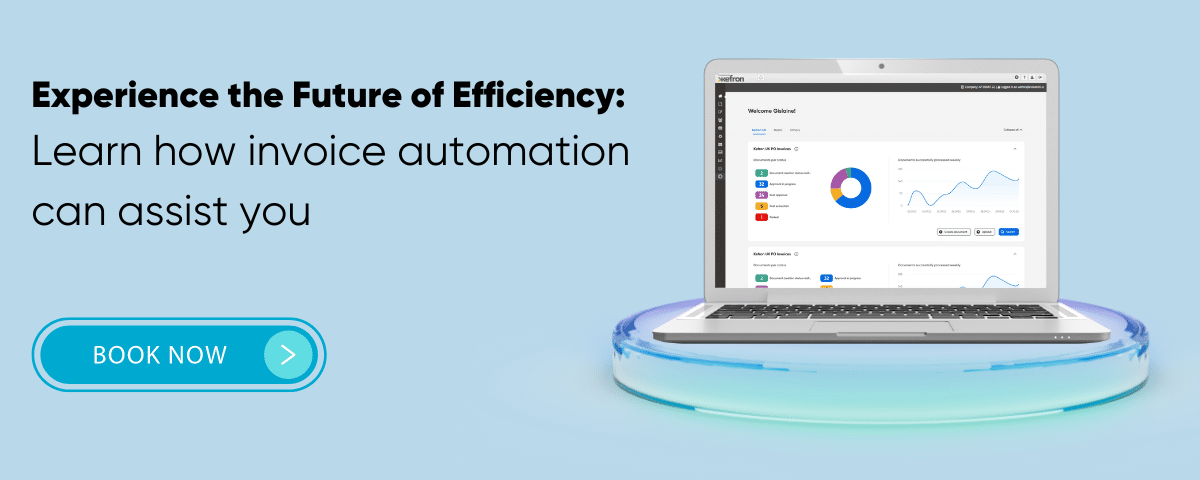
Kefron AP is a robust automation tool designed to enhance the efficiency of accounts payable reconciliation. It digitises invoices for seamless processing, approval, and record-keeping. Whether invoices arrive by post, fax, or email, Kefron AP can process them within minutes, handling data entry and validation so that staff only need to manage exceptions.
Features of Kefron AP
- Automated Data Capture: Kefron AP reads and extracts required invoice fields such as supplier name, line items, VAT, and PO numbers, drastically reducing manual data entry time and effort.
- Workflow Integration: The tool integrates seamlessly with finance systems, matching extracted live PO data against supplier invoices for approval and using live GL coding from the finance system for non-PO workflows, ensuring accurate coding and approval notifications.
- Real-Time Processing and Reporting: Kefron AP provides out-of-the-box APIs and custom integrations with various finance solutions, allowing for real-time invoice access and keyword searches, enhancing the visibility and manageability of financial records.
- Custom Workflows: Custom workflows in Kefron AP auto-direct invoices to pre-determined approvers via in-app notifications, streamlining the approval process and reducing delays.
Benefits of Using Kefron AP
- Eradicate Bottlenecks: Automation through Kefron AP ensures that all invoices are uploaded and captured on the system immediately, providing instant visibility and driving accountability.
- Eliminate Manual Errors: By capturing all key information from invoices automatically, Kefron AP eliminates manual data entry, significantly reducing errors and enhancing accuracy.
- Fast-Track Approvals: Kefron AP facilitates quicker invoice approvals, which is often cited as a top benefit of automated workflows. This leads to improved invoice processing times and decreased costs.
The Future of Accounts Payable Reconciliation
As businesses continue to navigate the complexities of financial management, the integration of advanced automation tools like Kefron AP will play an increasingly critical role. By automating repetitive and error-prone tasks, companies can ensure that their accounts payable reconciliation processes are not only efficient but also accurate and secure.
Moving Towards Full Automation
The transition from manual to automated accounts payable reconciliation is more than just a trend; it’s a necessity for modern businesses. Automation tools provide the scalability needed to handle growing volumes of transactions without compromising accuracy. As a result, businesses can focus more on strategic financial management rather than getting bogged down by routine administrative tasks.
Continuous Improvement
Automation tools like Kefron AP are designed with continuous improvement in mind. They leverage cutting-edge technology to adapt to changing business needs, ensuring that the reconciliation process remains efficient and effective. This adaptability is crucial for businesses looking to maintain a competitive edge in an increasingly digital world.
Final Thoughts on Accounts Payable Reconciliation
Accounts payable reconciliation is a vital process for maintaining financial accuracy and stability. By adopting automation tools like Kefron AP, businesses can streamline their reconciliation processes, reduce errors, and enhance overall efficiency. As companies continue to embrace digital transformation, the role of automation in accounts payable reconciliation will only become more significant, driving improvements in financial management and fostering stronger relationships with suppliers.
Incorporating technology into accounts payable reconciliation processes enhances efficiency, accuracy, and security. Automation tools like Kefron AP simplify data entry, streamline reconciliation reporting, and integrate seamlessly with financial systems. These advancements allow businesses to maintain accurate financial records, prevent fraud, and foster stronger relationships with suppliers. Regular and automated reconciliation practices not only streamline operations but also build a foundation of financial integrity and trust with suppliers.